- Home
- /
- Products
- /
- Alloy Steel
- /
- 40Cr SCr440 5140 Alloy Structural Steel
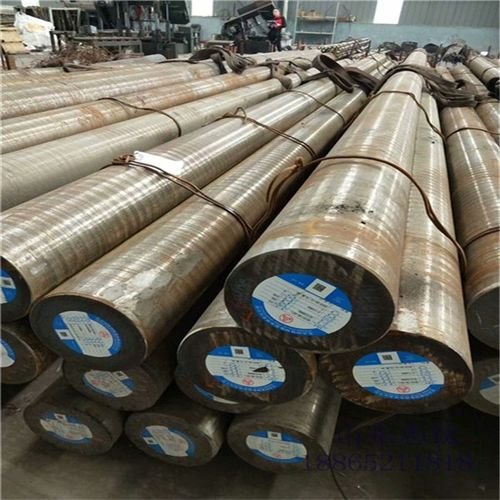
40Cr SCr440 5140 Alloy Structural Steel
Details
Brief Introduction of 40Cr Alloy Structural Steel
40Cr is a widely used medium-carbon chromium alloy structural steel standardized under China’s GB/T 3077, renowned for its balanced strength, toughness, hardenability and machinability, making it the most universal quenched & tempered steel for global mechanical manufacturing.
Standard Chemical Composition of 40Cr
| Element | Mass Fraction Range | Core Function |
|---|---|---|
| C | 0.37–0.44% | Determines basic strength and hardness |
| Si | 0.17–0.37% | Deoxidizes, enhances yield strength & elasticity |
| Mn | 0.50–0.80% | Improves hardenability and impact toughness |
| Cr | 0.80–1.10% | Core alloy element, boosts wear & corrosion resistance |
| P/S | ≤0.035% each | Impurities strictly controlled to avoid brittleness |
International Equivalent Grades of 40Cr
| Region | Standard Grade | Applicable Standard |
|---|---|---|
| China | 40Cr | GB/T 3077 |
| USA | AISI 5140 | ASTM A29/A29M |
| Europe/Germany | EN/DIN 41Cr4 (1.7035) | EN 10083-1 / DIN 17200 |
| Japan | JIS SCr440 | JIS G4053 |
| ISO | ISO 41Cr4 | ISO 683-1 |
| Russia | GOST 40Х | GOST 4543 |
After quenching and tempering, 40Cr reaches a tensile strength over 810 MPa with stable toughness; high-frequency surface hardening lifts surface hardness to HRC 50–55 for anti-wear demands. It is widely applied in three core industries: automotive (connecting rods, transmission gears, crankshafts), general machinery (machine tool spindles, spline shafts, high-strength bolts), and engineering machinery (excavator pin shafts, hydraulic piston rods). With affordable cost and flexible heat treatment options, 40Cr remains the preferred medium-load alloy steel for mass production worldwide.
Contact us
008617701706555
Room 903, Canyang Zone, No.1016 Youyi Road, Baoshan District, Shanghai, P.R.China
