- Home
- /
- Products
- /
- Mold Steel
- /
- D2 Cr12Mo1V1 SKD11 Х12МФ1 Cold Work Tool Steel
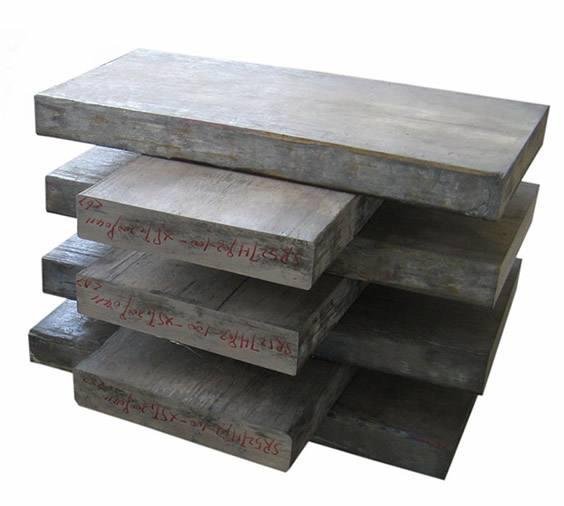
D2 Cr12Mo1V1 SKD11 Х12МФ1 Cold Work Tool Steel
Details
AISI D2 is a premium air-hardening high-carbon high-chromium ledeburite cold work tool steel specified under ASTM A681. Its high chromium and carbon content forms massive hard alloy carbides, delivering extreme abrasion resistance, outstanding dimensional stability during air quenching, moderate corrosion resistance after polishing, and excellent deep hardenability. Compared with water-oil quenched steels, air cooling greatly reduces heat treatment deformation and cracking risks, making it the top choice for long-service-life precision cold forming tooling worldwide. Its only weakness is relatively low impact toughness, so it is not recommended for tools bearing severe heavy impact loads.
Table 1: Standard Chemical Composition of AISI D2 (Mass Fraction, wt.%)
表格
| Element | Content Range | Metallurgical Function |
|---|---|---|
| C | 1.40–1.60% | Forms hard chromium carbides, ensures ultra-high hardness & wear resistance |
| Si | 0.20–0.60% | Deoxidizes molten steel, improves oxidation resistance during forging |
| Mn | 0.20–0.60% | Refines grain structure and optimizes annealed machinability |
| Cr | 11.00–13.00% | Core alloy element; boosts hardenability, wear resistance and mild anti-rust performance |
| Mo | 0.70–1.20% | Enhances secondary hardening capacity and restricts temper brittleness |
| V | 0.70–1.10% | Produces fine vanadium carbides, further elevates abrasive wear resistance |
| P | ≤0.030% | Harmful impurity strictly limited to avoid cold brittleness |
| S | ≤0.030% | Controlled to eliminate hot cracks in hot forging process |
Table 2: International Equivalent Grades of D2
表格
| Region | Standard Grade | Material No. & Executive Standard |
|---|---|---|
| USA | AISI D2 (T30402) | ASTM A681, SAE J437 |
| China | Cr12Mo1V1 | GB/T 1299 (exact equivalent); Cr12MoV is low-alloy substitute |
| Europe/Germany | X155CrMoV12-1 | W.Nr 1.2379, EN ISO 4957 |
| Japan | SKD11 | JIS G4404 |
| ISO | 160CrMoV12 | ISO 4957 |
| Russia | Х12МФ1 | GOST 5950 |
Under standard heat treatment (preheat 800–850℃, air quench at 1000–1030℃, double temper at 180–220℃), D2 reaches stable hardness of 58–62 HRC. It is supplied in hot rolled black skin round bars, flat plates, forged mold blocks and precision ground bright bars, with ESR remelting grade available for high-purity high-precision molds.
Its application concentrates on high-abrasion cold processing fields. First, stamping & blanking industry: long-run blanking dies, piercing punches, lamination dies and trimming tools for stainless steel, silicon steel sheet and high-hardness alloy plates. Second, metal forming: cold extrusion dies, deep drawing molds, thread rolling dies and coining tools for screw, bolt and fastener mass production. Third, industrial cutting & measuring tools: heavy shear blades, slitter knives, forming rolls, precision gauges and wear-resistant mandrels. It is also widely used for high-wear plastic mold inserts, wear sleeves and high-grade handmade cutting blades requiring long edge retention.
Thanks to globally unified equivalent grades, stable dimensional accuracy and extraordinary wear resistance, D2 dominates high-volume cold work mold manufacturing and is irreplaceable for precision tooling that demands extended service cycles.
Contact us
008617701706555
Room 903, Canyang Zone, No.1016 Youyi Road, Baoshan District, Shanghai, P.R.China
