- Home
- /
- Products
- /
- Engineering alloy steel
- /
- AISI 8620 20CrNiMo SNCM220 20NiCrMo2 20ХНМ 1.6523 low-carbon alloy carburizing steel
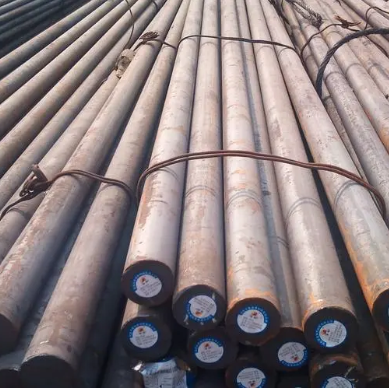
AISI 8620 20CrNiMo SNCM220 20NiCrMo2 20ХНМ 1.6523 low-carbon alloy carburizing steel
Details
AISI 8620 is a classic nickel-chromium-molybdenum low-carbon alloy carburizing steel defined by SAE J403 standard. With low carbon content and composite alloy elements of Ni, Cr and Mo, it boasts excellent carburizing performance, superior core toughness and good hardenability. After carburizing, quenching and low-temperature tempering, the workpiece surface gains high hardness and wear resistance while the core retains strong impact resistance, perfectly solving the conflict between surface abrasion resistance and internal anti-shock capacity. It features outstanding forgeability, machinability and welding performance under annealed state, widely applied for medium-load transmission parts all over the world.
Table 1: Chemical Composition of AISI 8620 (Mass Fraction, wt.%)
表格
| Element | Content Range | Metallurgical Function |
|---|---|---|
| C | 0.18–0.23% | Low carbon ensures tough core after carburizing treatment |
| Si | 0.15–0.35% | Deoxidize molten steel and raise elastic limit |
| Mn | 0.70–0.90% | Refine grains and improve hardening performance |
| Ni | 0.40–0.70% | Greatly enhance low-temperature impact toughness of core matrix |
| Cr | 0.40–0.60% | Boost carburized layer hardness and wear resistance |
| Mo | 0.15–0.25% | Prevent temper brittleness and stabilize heat treatment structure |
| P | ≤0.035% | Harmful impurity to be strictly limited to avoid cold brittleness |
| S | ≤0.035% | Controlled to reduce hot cracking risk during hot forging |
Table 2: International Equivalent Grades of AISI 8620
表格
| Region | Standard Grade | Material No. & Executive Standard |
|---|---|---|
| United States | AISI 8620, UNS G86200 | SAE J403, ASTM A29 |
| China | 20CrNiMo | GB/T 3077 |
| Europe | 20NiCrMo2-2 | W.Nr 1.6523, EN 10084 |
| Japan | SNCM220 | JIS G4053 |
| ISO | 20NiCrMo2 | ISO 683-1 |
| Russia | 20ХНМ | GOST 4543 |
The standard heat treatment flow of 8620 consists of high-temperature carburizing at 900–930℃, oil quenching and tempering at 180–220℃. The carburized surface hardness reaches HRC 58–62 with remarkable wear resistance, while the core hardness stays HRC 28–40 to withstand frequent impact and alternating loads. It can be supplied in diverse forms: hot rolled black skin round bars, precision ground bright bars, wire rods, forged blanks and seamless alloy tubes, matching mass production of gear manufacturers.
Its application covers three core industries. First, automotive transmission system: drive gears, gear shafts, differential pinions, camshafts and planet gears of passenger cars, trucks and new energy vehicles, which endure continuous friction and impact during operation. Second, engineering machinery: medium-load gear components, spline shafts, chain sprockets and pin sleeves for excavators, loaders and agricultural machinery. Third, general precision equipment: reducer gears, textile machine transmission parts, bearing retainers and small hydraulic structural parts that require both wear-resistant surface and tough inner core. It is also widely used for motorcycle engine gears and wind power small speed change components.
With balanced carburizing performance, stable mechanical properties and globally recognized equivalent grades, AISI 8620 has become the mainstream carburizing alloy steel for medium-load gear production and occupies a vital position in automotive and machinery manufacturing supply chains.
Contact us
008617701706555
Room 903, Canyang Zone, No.1016 Youyi Road, Baoshan District, Shanghai, P.R.China
