- Home
- /
- Products
- /
- Stainless Steel
- /
- 3Cr13 SUS420J2 X30Cr13 30Х13 a high-carbon martensitic stainless steel
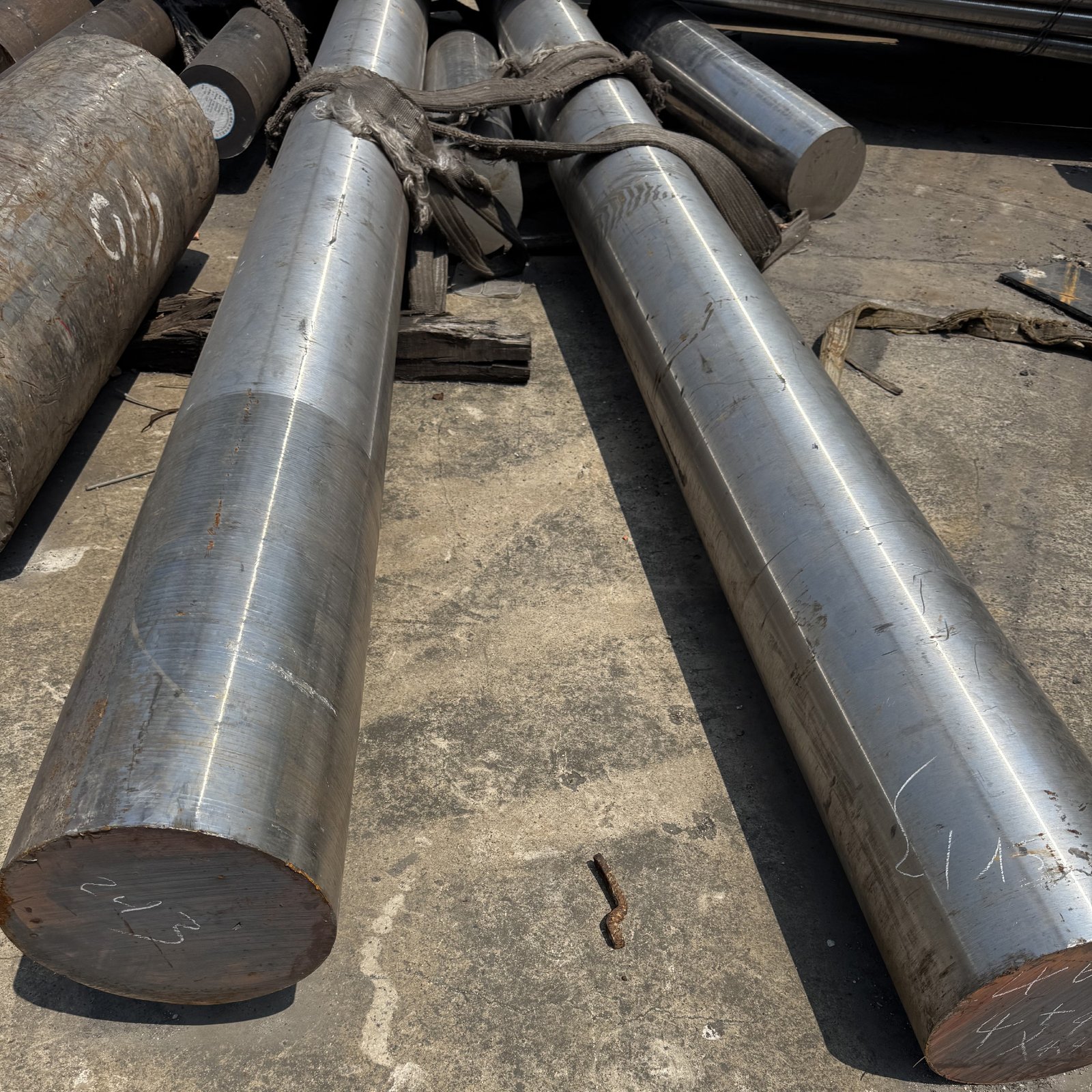
3Cr13 SUS420J2 X30Cr13 30Х13 a high-carbon martensitic stainless steel
Details
3Cr13 is a high-carbon martensitic stainless steel specified in GB/T 1220 standard. With higher carbon content than 1Cr13 and 2Cr13, it can obtain ultra-high hardness and outstanding wear resistance after quenching treatment, while its toughness and corrosion resistance are slightly weakened. It contains 12.00%–14.00% chromium, which forms a passive protective film to resist atmospheric, fresh water and weak alkali corrosion, but it cannot resist chloride, seawater and strong acid medium. This steel is widely used for anti-rust tools, molds and wear-resistant parts that demand high surface hardness.
Chemical Composition of 3Cr13 (Mass Fraction, wt.%)
| Element | Content Range | Metallurgical Function |
|---|---|---|
| C | 0.26–0.35% | High carbon provides ultra-high hardness and abrasion resistance after quenching |
| Si | ≤1.00% | Deoxidize molten steel, enhance high-temperature oxidation resistance |
| Mn | ≤1.00% | Refine grain structure, improve machinability under annealed condition |
| Cr | 12.00–14.00% | Key anti-corrosion element to form chromium oxide passive film |
| P | ≤0.040% | Harmful impurity limited to avoid cold brittleness under impact load |
| S | ≤0.030% | Strictly controlled to prevent hot cracking during forging and hot processing |
International Equivalent Grades of 3Cr13
| Region | Standard Grade | Material No. & Executive Standard |
|---|---|---|
| China | 3Cr13 | GB/T 1220 stainless steel bar |
| United States | AISI 420, UNS S42030 | ASTM A240 / A480 |
| Europe/Germany | X30Cr13 | W.Nr 1.4028, EN 10088-3 |
| Japan | SUS420J2 | JIS G4303 stainless steel |
| ISO | X30Cr13 | ISO 15510 |
| Russia | 30Х13 | GOST 5632 |
The standard heat treatment process is oil quenching at 980–1050℃ followed by low-temperature tempering at 200–300℃. After heat treatment, its hardness can reach HRC 48–56, which is much higher than 1Cr13 and 2Cr13. Its disadvantage is poor impact toughness, so it is not suitable for components bearing heavy impact loads. Under annealed state, the material is soft for turning, milling and polishing, and it can be supplied as hot rolled black round bars, precision ground bright bars, stainless plates and forged blanks.
Its application concentrates on high-hardness anti-rust products. First, food and kitchen hardware: high-hardness kitchen knives, chef knives, razor blades, scissors and other cutting tools that require long cutting life and rust resistance. Second, plastic mold industry: mold inserts, sliders and wear-resistant sleeves for corrosion-resistant plastic molds. Third, measuring and medical accessories: hardness measuring blocks, low-impact surgical tool blanks, watch bearing parts and wear-resistant shafts under mild corrosion. Besides, it is also used for textile cutting blades, food machinery scraper parts and lightweight wear-resistant roller sleeves.
With remarkable wear resistance, adjustable high hardness and competitive cost, 3Cr13 is the preferred martensitic stainless steel for anti-rust cutting tools and precision corrosion-resistant molds, widely adopted by kitchenware, mold and hardware manufacturers globally.
Contact us
008617701706555
Room 903, Canyang Zone, No.1016 Youyi Road, Baoshan District, Shanghai, P.R.China
