- Home
- /
- Products
- /
- Stainless Steel
- /
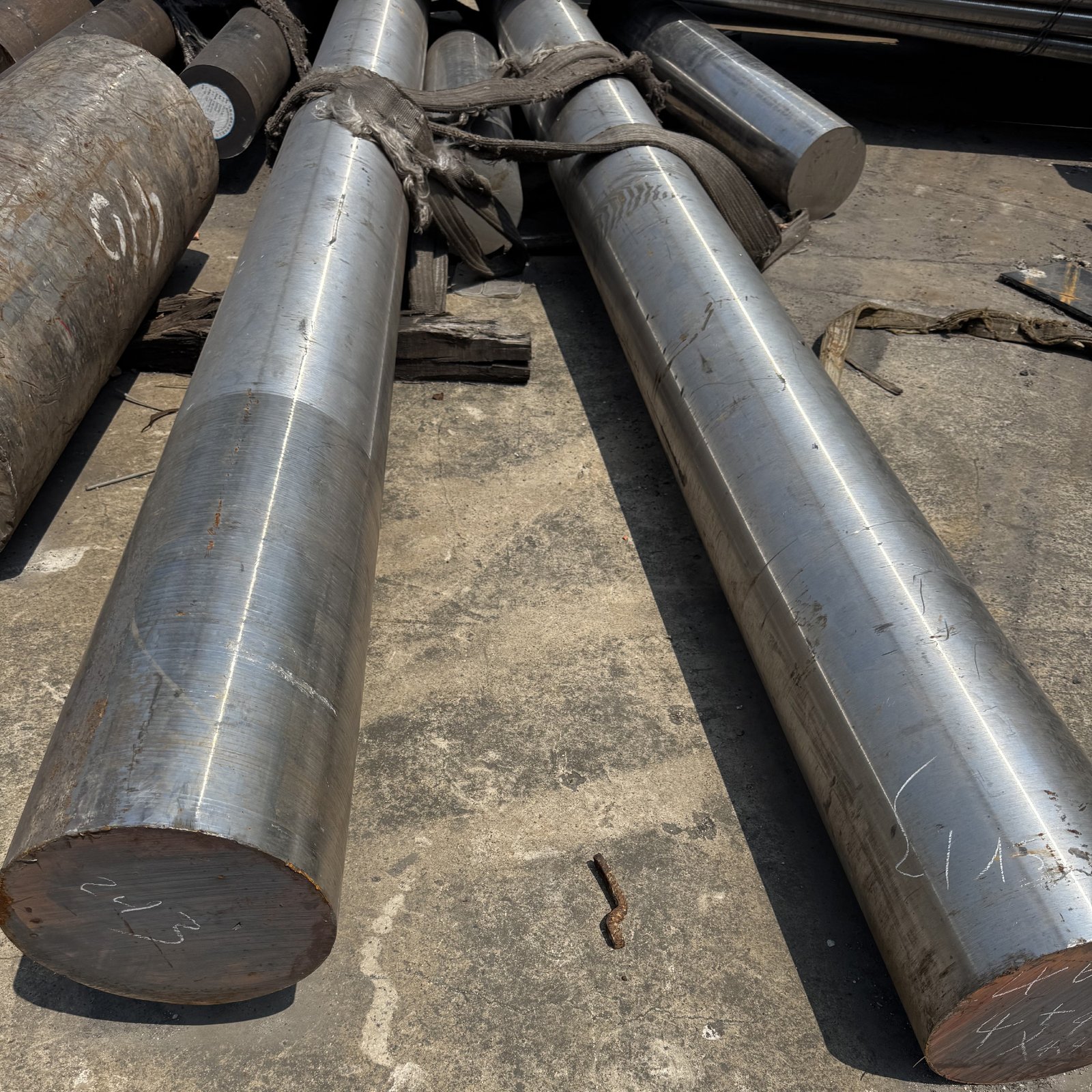
- 2Cr13 X20Cr13 AISI 420 X20Cr13 20Х13 a medium-carbon martensitic stainless steel
2Cr13 X20Cr13 AISI 420 X20Cr13 20Х13 a medium-carbon martensitic stainless steel
Details
2Cr13 is a medium-carbon martensitic stainless steel formulated under GB/T 1220 standard, serving as a versatile middle-grade material between low-toughness 3Cr13 and low-hardness 1Cr13. Its medium carbon and 12–14% chromium content deliver balanced corrosion resistance, hardness and impact toughness. After quenching and tempering, it attains moderate hardness while retaining reliable rust-proof capability against fresh water, atmospheric moisture and weak alkaline solutions. It supports forging, machining and simple polishing, widely used for daily hardware and medium-load corrosion-resistant mechanical components.
Chemical Composition of 2Cr13 (Mass Fraction, wt.%)
| Element | Content Range | Metallurgical Function |
|---|---|---|
| C | 0.16–0.25% | Medium carbon balances hardness, wear resistance and toughness |
| Si | ≤1.00% | Deoxidizes molten steel, improves oxidation resistance during hot working |
| Mn | ≤1.00% | Refines grains, optimizes machinability under annealed state |
| Cr | 12.00–14.00% | Core anti-corrosion element, forms compact passive film to resist mild corrosion |
| P | ≤0.040% | Restricted impurity to eliminate cold brittleness under impact load |
| S | ≤0.030% | Strictly controlled to prevent hot cracking during forging |
International Equivalent Grades of 2Cr13
| Region | Standard Grade | Material No. & Standard Code |
|---|---|---|
| China | 2Cr13 | GB/T 1220 stainless steel bars |
| USA | AISI 420, UNS S42000 | ASTM A240, ASTM A480 |
| Europe/Germany | X20Cr13 | W.Nr 1.4021, EN 10088-3 |
| Japan | SUS420J1 | JIS G4303 stainless steel |
| ISO | X20Cr13 | ISO 15510 |
| Russia | 20Х13 | GOST 5632 |
Standard heat treatment process includes oil quenching at 980–1050℃ and tempering at 200–600℃. Its adjustable hardness ranges from HRC 28 to HRC 42. Compared with 1Cr13, it achieves higher surface hardness and better wear resistance; compared with high-carbon 3Cr13, it owns superior toughness and less tendency to crack during stamping and forging. It performs well in humid air and fresh water, but fails to withstand long-term erosion of seawater, strong acid and high-chloride environments.
Its application covers three mainstream fields. First, catering and daily hardware: kitchen scissors, fruit knives, table knives, spoons and kitchenware accessories requiring rust resistance and moderate cutting performance. Second, fluid and general machinery: pump impellers, medium-pressure valve bodies, valve cores, corrosion-resistant shaft sleeves and small hydraulic parts working with clean water. Third, medical and precision accessories: blank materials for low-load surgical instruments, watch internal parts, corrosion-resistant mold frames and measuring tool bases. It is also applied to steam equipment parts with medium temperature and low corrosion.
Available supply forms include hot rolled black skin round bars, precision polished bright bars, stainless steel plates and forged blanks. With excellent comprehensive balance of performance, stable processing property and cost advantage, 2Cr13 becomes the most widely used martensitic stainless steel for daily hardware and medium-corrosion mechanical parts worldwide.
Contact us
008617701706555
Room 903, Canyang Zone, No.1016 Youyi Road, Baoshan District, Shanghai, P.R.China
