- Home
- /
- Products
- /
- Stainless Steel
- /
- 1Cr13 410 X12Cr13 X12Cr13 12Х13 low-carbon martensitic stainless steel
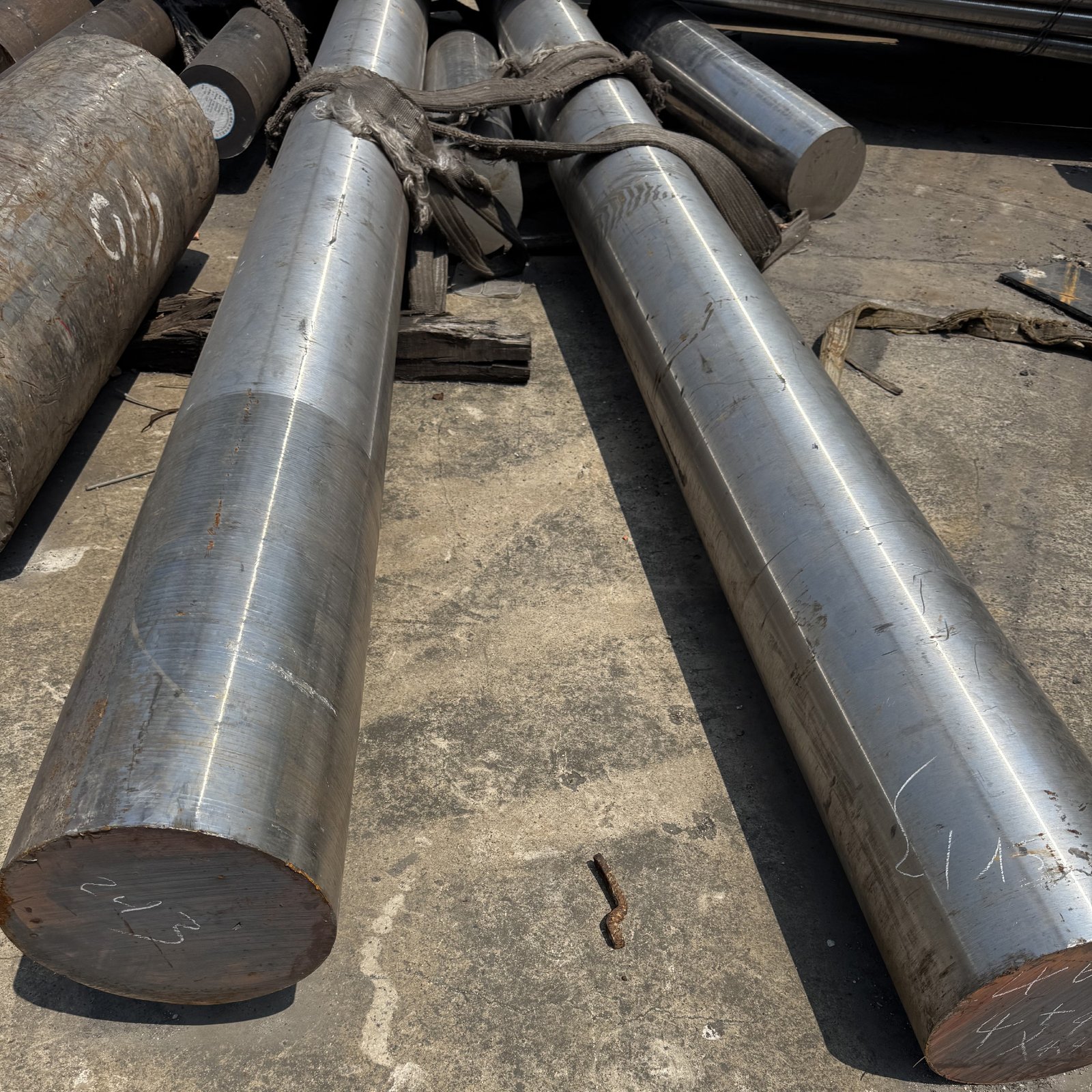
1Cr13 410 X12Cr13 X12Cr13 12Х13 low-carbon martensitic stainless steel
Details
1Cr13 is a widely used low-carbon martensitic stainless steel specified in Chinese standard GB/T 1220. Containing over 12% chromium and low carbon content, it forms a dense passive chromium oxide film on the surface to resist corrosion from fresh water, steam, weak alkalis and mild atmospheric environment. Compared with 2Cr13 and 3Cr13, its low carbon brings superior toughness, plasticity and welding performance, though the hardness after heat treatment is relatively low. It can be processed by forging, stamping, cutting and welding, and is available in hot-rolled black round bars, polished bright bars, plates and forgings for general corrosion-resistant structural parts.
Chemical Composition of 1Cr13 (Mass Fraction, wt.%)
Chemical Composition of 1Cr13 (Mass Fraction, wt.%)
| Element | Content Range | Metallurgical Function |
|---|---|---|
| C | 0.08–0.15% | Low carbon ensures high impact toughness and good weldability |
| Si | ≤1.00% | Deoxidize molten steel, improve high-temperature oxidation resistance |
| Mn | ≤1.00% | Refine grain structure, enhance machinability under annealed state |
| Cr | 11.50–13.50% | Core anti-corrosion element, build protective anti-rust passive film |
| P | ≤0.040% | Harmful impurity strictly limited to prevent cold brittleness |
| S | ≤0.030% | Controlled to avoid hot cracking during hot forging and forming |
International Equivalent Grades of 1Cr13
| Region | Standard Grade | Material No. & Executive Standard |
|---|---|---|
| China | 1Cr13 | GB/T 1220 stainless steel bar |
| United States | AISI 410, UNS S41000 | ASTM A240 / A480 |
| Europe/Germany | X12Cr13 | W.Nr 1.4006, EN 10088-3 |
| Japan | SUS410 | JIS G4303 stainless steel |
| ISO | X12Cr13 | ISO 15510 |
| Russia | 12Х13 | GOST 5632 |
Under full annealing, 1Cr13 has soft texture for easy machining. After quenching at 980–1050℃ and high-temperature tempering, its hardness ranges HRC 20–35 with excellent impact resistance. It cannot reach ultra-high hardness like high-carbon martensitic stainless steel, but maintains stable mechanical properties under alternating impact loads and mild corrosive conditions. It cannot resist strong acid, chloride and seawater long-term erosion, so it is not suitable for marine or chemical severe corrosion working environment.
Its application covers multiple industrial fields. First, power equipment: steam turbine moving blades, guide vanes, boiler pipe accessories and thermal power pump parts enduring high-temperature steam erosion. Second, fluid machinery: water pump shafts, valve bodies, valve cores and impellers for water supply, heating and hydraulic systems. Third, general machinery & hardware: corrosion-resistant shafts, bearing sleeves, mechanical structural brackets, low-load kitchen hardware and medical instrument base frames. Fourth, petroleum and light industry: low-pressure pipeline fittings and small mechanical parts contacting weak alkaline medium.
With balanced corrosion resistance, outstanding toughness, affordable cost and mature processing performance, 1Cr13 is the preferred martensitic stainless steel for impact-resistant anti-rust structural components and occupies a key position in thermal power, water treatment and general machinery manufacturing industries.
Contact us
008617701706555
Room 903, Canyang Zone, No.1016 Youyi Road, Baoshan District, Shanghai, P.R.China
